
Pablo Escobar's Hippos: A Surreal Legacy

By Zoraida Díaz
ZUMA Press

In the lush Magdalena River basin of Colombia, an unusual ecological crisis unfolds—one born not from nature's design, but from the extravagant whims of a drug trafficker once listed by Forbes magazine as the seventh-richest person in the world.
The story of how approximately 200 hippopotami came to roam the waterways of rural Antioquia is a tale as tall as any the Colombian writer Gabriel García Márquez ever wrote.
In the late 1970s, when Pablo Escobar was the front man for the Medellín cartel’s vast cocaine-trafficking operations, hundreds of exotic animals were brought to Hacienda Nápoles, a sprawling 5,000-acre estate that became Escobar’s personal zoo. The giraffes, elephants, antelopes and four hippos (three females and one male), were the star attractions.
Escobar's hippos were never intended to represent anything beyond his wealth and ambition. Yet after his death in 1993, and the abandonment and sacking of Hacienda Nápoles, these four animals survived. They escaped or were released into the wild, finding the Magdalena River and its tributaries to be an ideal habitat. With year-round fresh water, abundant grazing lands, and critically, an absence of natural predators, the hippo population exploded exponentially.
In 2022, Colombia's Ministry of Environment and Sustainable Development designated the hippopotamus as an "invasive species"—a classification that represents both an ecological acknowledgment and an administrative headache. Environmental officials like David Echeverri López, the Jefe Oficina de Biodiversidad, have repeatedly called for national-level intervention, noting that the hippos traverse multiple jurisdictional boundaries, moving between different environmental authorities' territories as they disperse upstream and downstream along the Magdalena. The current population hovers around 200, with an estimated 80 residing within the Hacienda Nápoles grounds, yet growth models suggest the
population could reach 1,500 by 2039 if current management strategies remain ineffective.
The ecological impact is staggering. Each hippopotamus consumes approximately 50 kilograms of grass daily, depleting vegetation and destroying habitats for native species. The animals foul waterways, creating zones of low oxygen and excess inorganic nutrients that threaten the river's 190 freshwater fish species, 200 mammal varieties, and nearly 400 bird species. Their territorial aggression and sheer physical mass—some weighing up to 3,000 pounds—alter river banks through erosion and further disrupt the ecological balance of the country’s main fluvial artery. Perhaps most concerning, hippos can transmit diseases to both human and native animal populations, representing a public health threat alongside the environmental one.
Despite the looming ecological risks, many in Colombia’s Magdalena Medio have adopted the giant African herbivores as unwitting emblems of the region and of Escobar’s legacy. Tourism is driven not only by the hippos but also by the draw of “narco-tourism” linked to the legendary drug lord.
A replica of the Piper PA-18 Super Cub, bearing the registration HK617, stands mounted at the entrance to what is now the Memorial Museum within the Hacienda Nápoles Theme Park. This plane, allegedly used by the Medellín cartel for its first cocaine shipment to the United States, symbolizes the genesis of Escobar’s international drug trafficking operations and the vast fortune it generated. Today, Escobar’s barbaric misdeeds have been transformed into myth, commodified in places like “La Tienda de Pablo,” a crafts store where a mannequin of the drug lord sits with a wad of bills, inviting tourists to capture a selfie with the “legend.” Statues of playful hippos, piled one atop another, now welcome visitors to the Hacienda Nápoles theme park, an official version of the park Escobar started almost half a century ago.
The Memorial Museum is possibly the only attempt in the region to honor and remember the victims of Escobar’s ruthless terrorist campaign against the Colombian state. On December 2, 2023, the 30th anniversary of Pablo Escobar’s death on a rooftop in Medellín, the influential daily El Espectador, compiled an incomplete list of his victims, and filled its front page with 661 names.
Hacienda Nápoles, Escobar’s once criminal headquarters, has become a source of ecological and economic opportunity, drawing international visitors who come to
witness this accidental intersection of nature and narco-history.The tourism boom has created a curious cognitive dissonance. As Isabel Romero Gerez, a 64-year-old environmental educator known as "Doña Chava," explains, the 1,700 residents of Cocorná Station now depend on river resources that include birdwatching, turtle releases, hippo watching, waterfalls, jet streams, boat rides, and campfires.
Yet beneath the surface of this tourist-friendly narrative lies genuine danger and ecological despair. Fishermen like Franki Zapata, 36, navigate treacherous waters nightly, forced to relocate their operations kilometers away to avoid aggressive hippos. Local residents bathe and work in rivers where hippos have been sighted with increasing frequency. The territorial aggression of female hippos, captured in photographs of them chasing boats, demonstrates that these are not tame animals despite their utility as tourist attractions.
Efforts to control the population have proven technically challenging and emotionally fraught. According to Sofía Fernández Africano, a biologist from the monitoring team of the environmental agency CORNARE (Regional Autonomous Corporation of the Negro and Nare River Basins), the entity has conducted 26 sterilization since 2011. The grueling procedures take 5-7 hours and occur under primitive field conditions—performed at night with only flashlights and field lanterns to illuminate the work. These surgeries represent Colombia's primary management strategy, working in tandem with attempts at relocation to facilities equipped to house large animals.
Yet the sterilization approach carries tragic risks, as exemplified by the December 2024 death of "Pipo," a young hippopotamus that had recently arrived at the Hotel Villa Sara's lagoon. During a sterilization attempt, veterinarians tranquilized the panicked animal, which drowned upon re-entering the water as the anesthesia took effect. The incident sparked significant protest from locals who argued that the hippo was docile and posed no threat, highlighting the emotional and ethical complexities surrounding these animals.
The culling strategy itself presents another moral quandary. When another hippo, nicknamed "Pepe" was killed in 2009 by hunters operating under government sanction, a photograph of soldiers standing triumphantly over the corpse sparked widespread public outrage—a reaction that reveals how these animals have transcended their status as invasive species to become symbolic figures within Colombia’s collective consciousness.
Remarkably, the hippo crisis has catalyzed an unexpected economic transformation. The region has pivoted toward wildlife tourism, capitalizing on what was once a symbol of criminality to create legitimate revenue streams. Doradal now features baby hippo statues welcoming visitors to restaurants, while the Hacienda Nápoles Theme Park draws tourists who feed carrots to hippos like "Paco," a 20-year-old descendant of Escobar's original four. Tour operators like Álvaro Díaz Romero offer hippo-watching expeditions along the Magdalena, though these excursions carry genuine risks—aggressive hippos can gallop at speeds up to 8 kilometers per hour along the river bottom and have been known to pursue boats.
The path forward remains uncertain. Environmental officials advocate for translocation of hippos to facilities with proper resources, while some locals, particularly those profiting from tourism, argue against eradication. Boatmen, like Álvaro Díaz Romero, 42, argue that the hippos are no longer African, but Colombian, and that they possess distinct characteristics that make them worthy of protection rather than elimination.
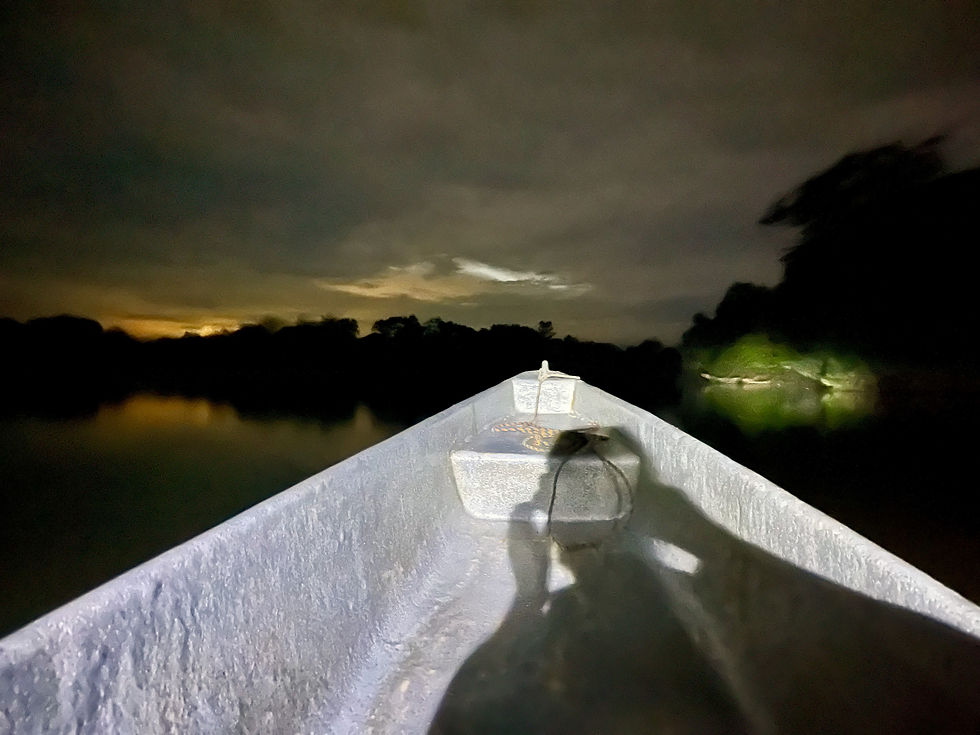
The hippopotamuses of the Magdalena River ultimately represent a complicated legacy that transcends simple narratives of environmental invasion or criminal legacy. Born from the obsessive acquisition of a drug trafficker, they have evolved into living symbols of both ecological crisis and economic opportunity—animals that embody the region's struggle to transform trauma into sustainability. As Colombia works toward a comprehensive national management plan, the hippos continue their nightly grazing, their presence a constant reminder that nature operates according to its own logic, indifferent to human ambitions or intentions. In the end, Escobar's exotic animals may prove to be his most enduring legacy—not a monument to his power, but a mirror reflecting a nation's attempt to reckon with its past while forging a new future.


Comments